
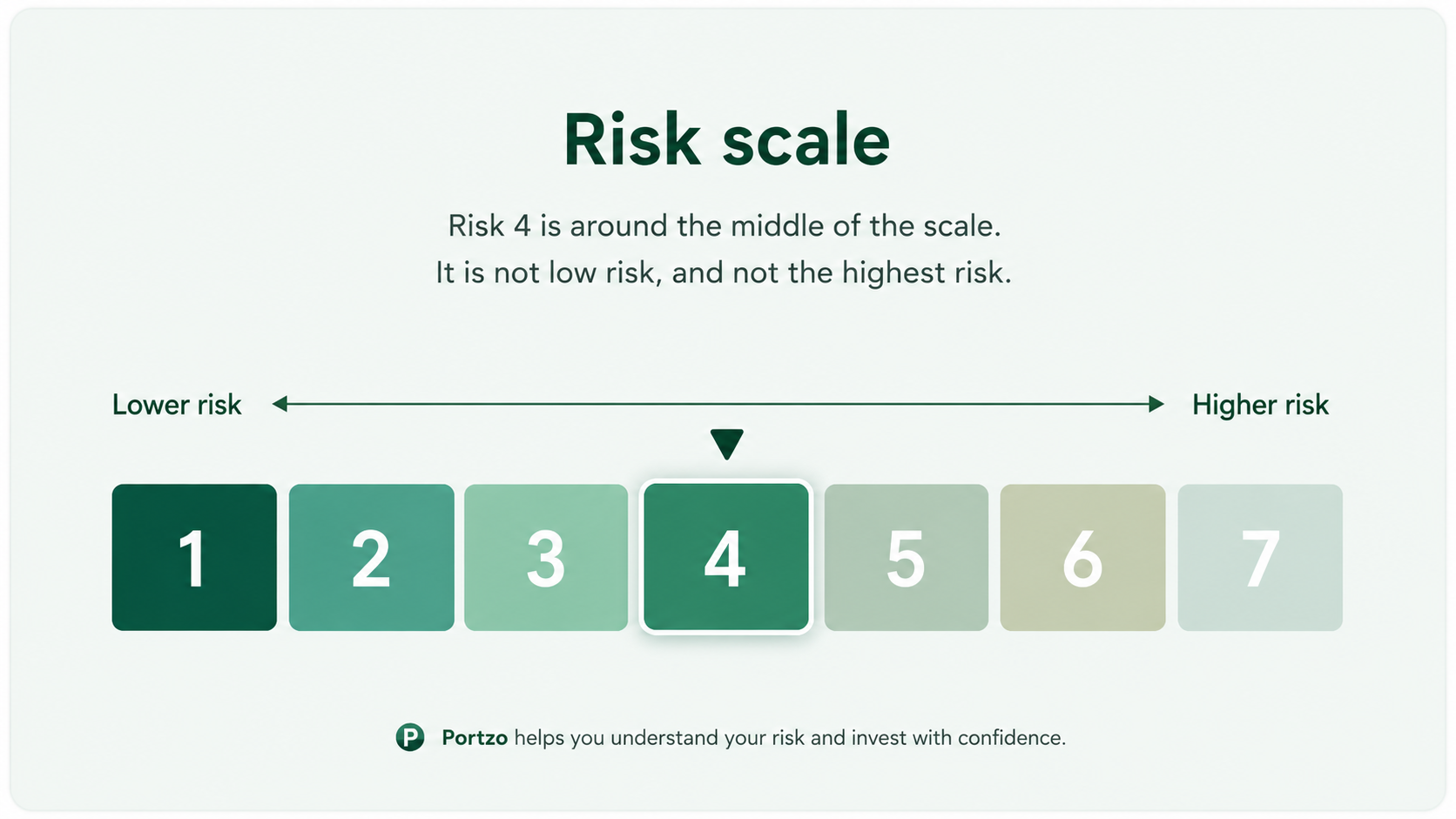
Risk 4 is a label, not a full story
A Risk 4 fund usually sits around the middle of a provider's risk scale. It is normally not the safest option, but it is also not usually the most aggressive. The problem is that the number can feel more precise than it really is.
Different pension providers can use different risk scales. A Risk 4 fund with one provider may not behave exactly like a Risk 4 fund with another provider. That is why the rating should be treated as a useful starting point, not a final decision.
The most important question is what the fund actually owns. A fund with a lot of shares will usually move more than a fund with more bonds or cash. If markets fall, the share-heavy fund may fall faster, even if both funds have a similar-looking risk label.
Risk also depends on your time horizon. Someone investing for 25 years may be able to live with more ups and downs than someone who expects to access money soon. The same fund can be reasonable for one person and uncomfortable for another.
How to use the rating
Use the risk number to narrow the list, then look deeper. Compare the fund objective, asset mix, past drawdowns and how it fits with your wider pension plan.
- Compare risk ratings within the same provider scale where possible.
- Look at what the fund owns, not only the number on the page.
- Ask whether you could stay invested during a difficult few months.
- Use longer time periods to understand how the fund behaves.