
Volatility means movement
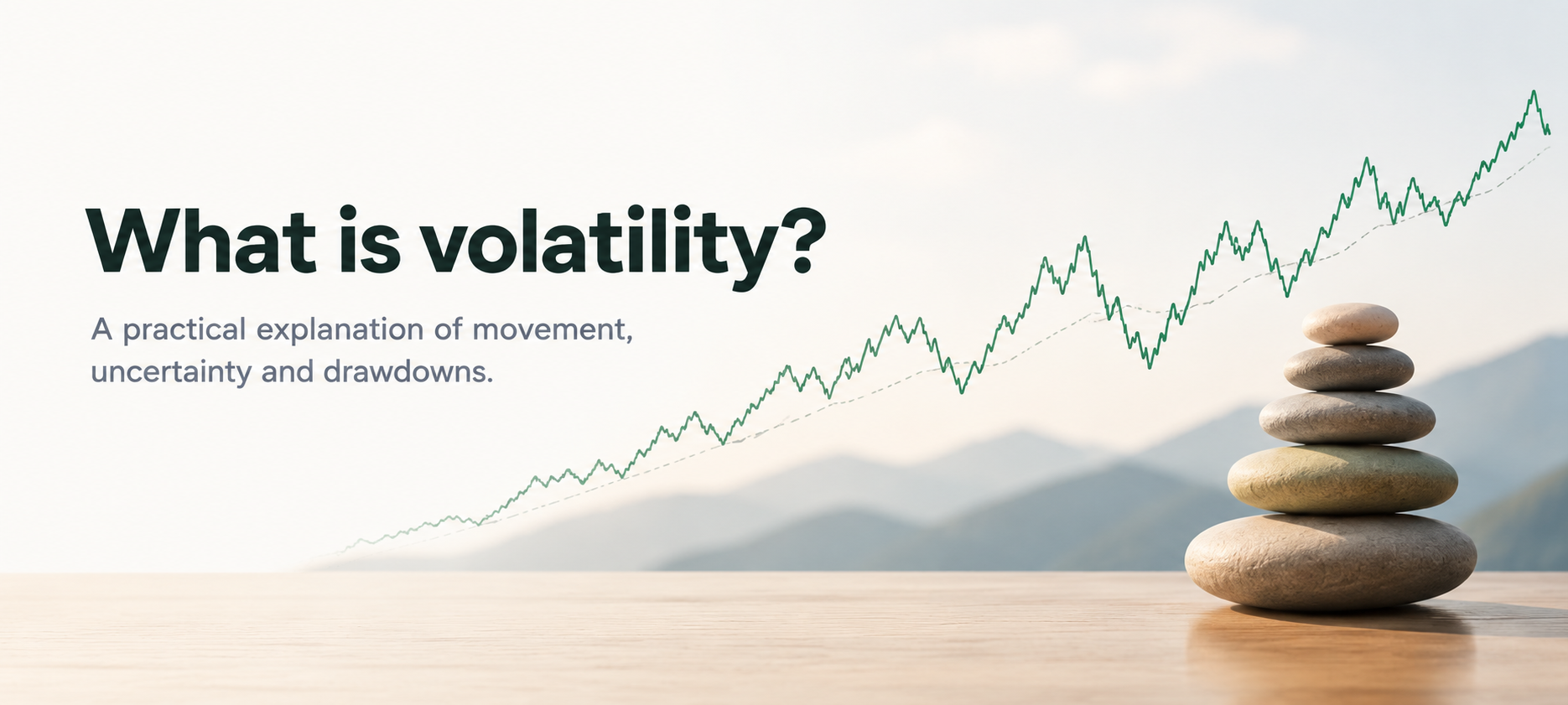
Volatility is a way of describing how much an investment moves up and down. A fund that changes value sharply from month to month is more volatile. A fund that moves more gently is less volatile.
Volatility is not always bad. Investments that grow over the long term often move around along the way. Shares, for example, can deliver strong long-term growth but can also fall sharply in difficult markets. The movement is part of the journey.
The challenge is emotional as much as mathematical. A fund may look suitable on paper, but if its falls make you panic and switch at the wrong time, it may not be suitable in practice. The best fund is not always the one with the highest possible return; it is often the one you can realistically hold.
Volatility also matters more over shorter time frames. If you need money soon, a large fall can be a serious problem. If your pension is many years away, short-term volatility may be easier to tolerate because there is more time to recover.
How to think about it
When comparing funds, look at performance and volatility together. A higher return may be less impressive if it came with much bigger falls.
- Higher volatility means a bumpier journey.
- Lower volatility can feel calmer but may reduce growth potential.
- Your time horizon affects how much volatility you can tolerate.
- Do not judge a fund only by its best periods.