
Start with like-for-like comparisons
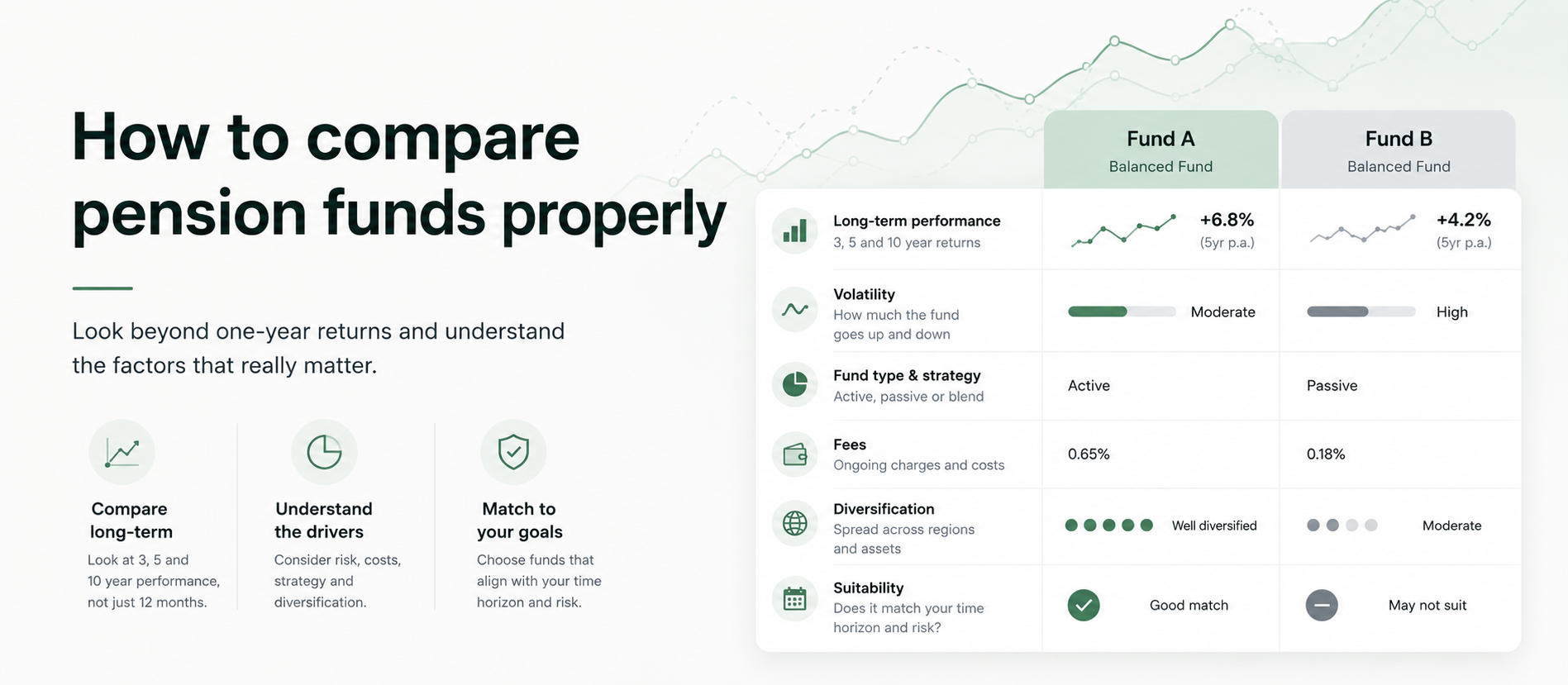
Comparing pension funds can be confusing because two funds can have very different goals. One fund may aim for steady growth, while another may take more risk to chase higher long-term returns. If you only compare the return number, you can miss the reason behind the result.
A good comparison starts with the fund objective. Ask what the fund is trying to do. Is it designed for growth, income, stability, retirement targeting or a mix of assets? Funds with different jobs should not be judged by the same single number.
Next, look at the risk rating and asset mix. A fund that holds more global equities may have stronger returns in good markets, but it may also fall more sharply in bad markets. A steadier fund may look less exciting, but it may be doing exactly what it is supposed to do.
Time period matters too. One-year performance can be heavily influenced by recent market conditions. Five-year and ten-year numbers, where available, can give a better sense of consistency. No time period is perfect, but using several periods helps reduce the chance of being misled.
A simple checklist
Before choosing between two funds, compare them side by side using the same set of questions.
- What is each fund trying to achieve?
- Are the risk ratings similar?
- What assets does each fund hold?
- How did each fund perform over one, three and five years?
- Did the fund take a lot of risk to get its return?