
Two different ways to invest
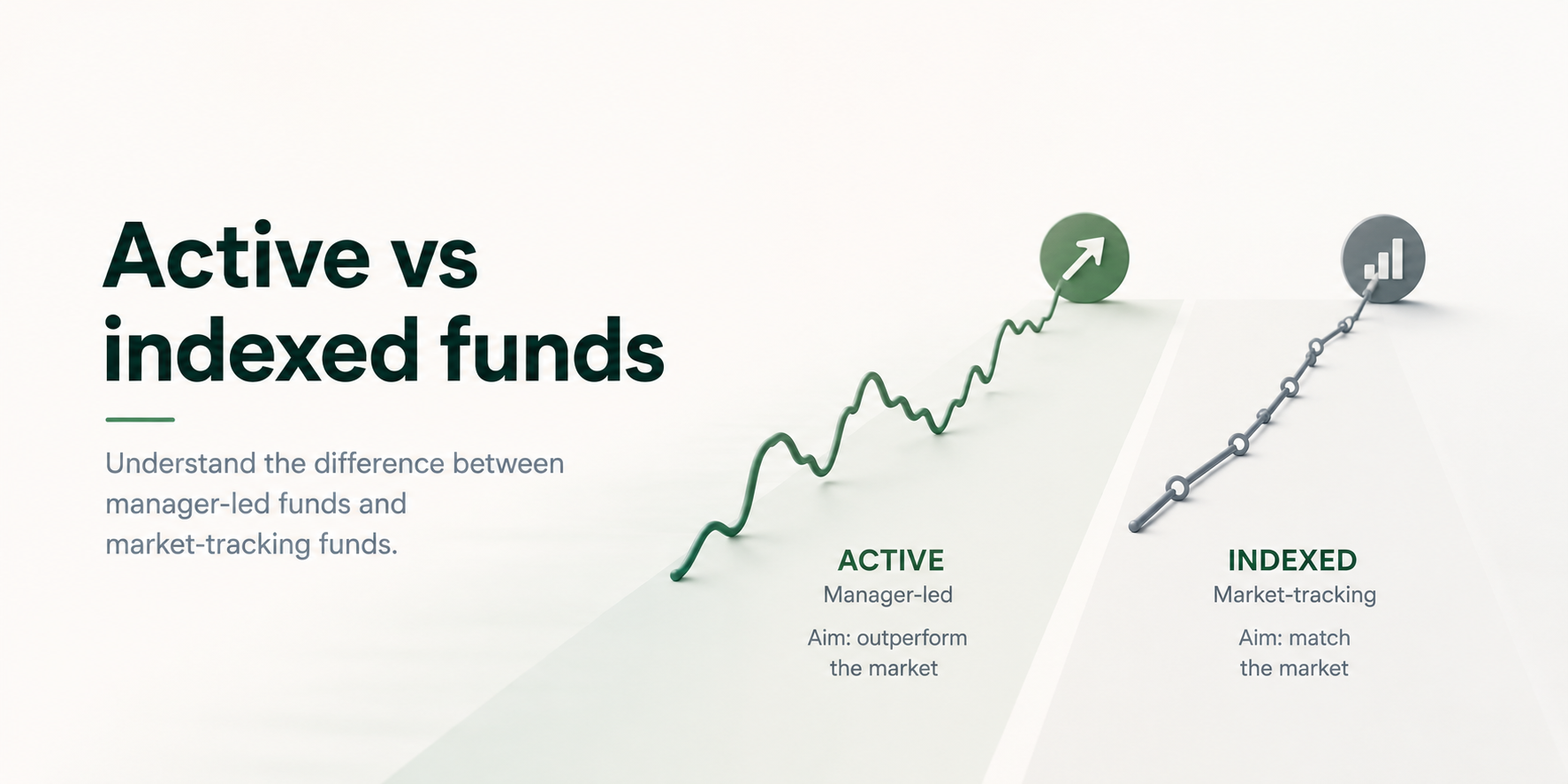
Active funds and indexed funds are two common ways to invest. An active fund is run by a manager or team who chooses what to buy and sell. An indexed fund tries to follow a market index, such as a broad share market or bond market.
The active manager is trying to make better decisions than the market average. That might mean choosing certain companies, avoiding others, or changing the fund when conditions change. If the manager is right, the fund may do better than the market. If the manager is wrong, it may do worse.
An indexed fund usually takes a simpler approach. It does not try to pick winners. It aims to track a chosen market as closely as possible. Because there is less decision-making involved, indexed funds often have lower charges and can be easier to understand.
Neither approach is automatically better. Active funds can be useful when a skilled manager adds value or manages risk well. Indexed funds can be useful when you want broad exposure, lower cost and less reliance on one manager's decisions.
What to compare
When choosing between active and indexed funds, compare cost, consistency and how much trust you are placing in the manager.
- Indexed funds are often simpler and lower cost.
- Active funds rely more on manager decisions.
- Both can rise and fall with markets.
- The right choice depends on the fund, not just the label.